(no buy challenge, low buy lifestyle, mindful spending, budgeting reset)
Spending in 2024 and Why It Never Felt Like Too Much
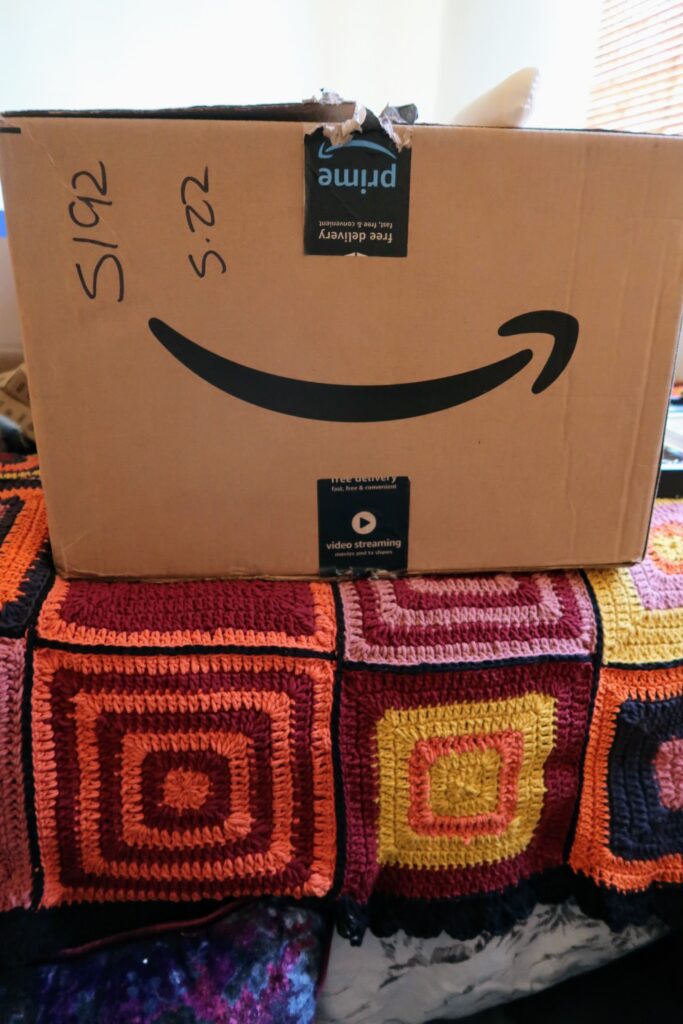
At the end of 2024, I finally sat down to see where my money was going. I knew I had spent more than I probably should have, but I wasn’t prepared for what I found.
Over the course of the year, I had spent nearly $12,000 on home decor, clothing, and nonessential Amazon purchases.
The surprising part was that it had never felt like I was spending that much.
It was $300 on a few shirts from Free People. Another $650 on Harry Potter Department 56 Christmas Village pieces. A $250 camping gadget that promised to make our next trip easier. None of those purchases seemed outrageous on their own, and because they were spread throughout the year, they never felt like a problem.
And I always had a reason.
The clothes would make me look more put together. The Christmas village would make our home feel cozy and magical during the holidays. The expensive vitamin C serum was surely going to become my new favorite skincare product, even though I already had two barely used bottles sitting in the cabinet.
Since our emergency fund was healthy and we were making good money, I convinced myself I had earned these little treats. Looking back, I realize I wasn’t really buying the items themselves. I was buying the feeling I hoped they would give me.
The Spending Cycle and Impulse Buying Habits
But of course, none of these purchases lived up to the story I had created about what they would do for me. The excitement of opening the packages faded almost as quickly as it arrived, replaced by the annoyance of breaking down yet another stack of cardboard boxes. Then came the guilt. I hated how much money I had spent, but instead of confronting that feeling, I shoved it into a dusty box in the back of my mind and tried not to think about it.
Before long, the cycle would start all over again. I’d find myself back on Anthropologie, Pottery Barn, or Le Creuset, “just browsing” for the next thing that might give me a little hit of dopamine or finally turn me into the idealized version of myself and my life that I kept chasing.
Realizing I Needed a Financial Reset
And so it wasn’t until I realized that I would be getting engaged soon and would need to start saving for a wedding that I decided it was time to get a full picture of our finances. I was terrified of what I would find, and that should have been a clue.
I downloaded Quicken (not sponsored) and linked all of my credit cards and bank details to it. I then spent several hours categorizing each purchase for the year to find out where the money I had earned was spent.
The results were sobering.
Nearly $5,000 had gone toward random Amazon purchases that I didn’t actually need. Another $7,000 had been spent on clothing and home decor.
Starting a No Buy Year 2025 and Low Buy Challenge Rules
I decided then and there that 2025 would become my no buy year.
My rules were simple: no clothing purchases, no home decor, and no buying things just because I wanted them. I could replace anything that broke, and I still allowed myself to buy supplies for hobbies like yarn or books because those were things I actively used and enjoyed.
I also canceled my Amazon Prime membership, which felt about as realistic as deciding to stop using electricity.
As dramatic as that sounds, I knew I needed to make impulse purchases less convenient. And one thing I know about myself is this: I will do just about anything to avoid paying for shipping.
Breaking Impulse Spending and Building a Want List
The first couple of months were the hardest, and I quickly realized that Pinterest and Instagram ads were one of my biggest triggers. I’d be scrolling when something perfectly curated for me would pop up, and suddenly I needed it.
In the past, my routine was almost automatic. I’d read a few reviews, convince myself it was worth the money, and have it in my cart and checked out within 15 minutes of seeing it.
Instead of buying it, I started adding it to a running “want” list. I promised myself that if I still genuinely wanted the item at the end of the year, I could buy it then. That one small change made a huge difference. I wasn’t telling myself “no” forever. I was just telling myself “not yet.” And in those first few months, that distinction made it much easier not to throw my entire no buy challenge out the window the moment something caught my attention.
How Buying Less Changed the Way I Saw My Home
Throughout the year, my relationship with shopping and money shifted dramatically. I was forced to confront WHY I wanted certain items, such as home decor and clothing. Through lots of journaling, I realized I had been trying to buy a feeling, and that was why I came away so unfulfilled after each purchase.
I was buying home decor because I had convinced myself that I would finally feel happy with our home once it matched the vision I had in my head, the dream aesthetic I kept chasing. Everywhere I looked in our house I saw things that needed to be upgraded, changed, or added, and it always felt like just one more thing would finally pull everything together and make it feel complete.
But when I stopped allowing myself to buy those things, I was forced to suddenly look at our home and possessions in a completely different light.
My default was no longer to try and solve every perceived insufficiency with a purchase. Instead, I needed to ask myself whether what we already owned was actually good enough, or if there was something else we already had that could serve the same function. That shift changed the way I saw our space. At first it felt uncomfortable, like I was noticing all the things I had been trying to ignore or fix with shopping, but over time I started to see that a lot of those “problems” were not really problems at all.
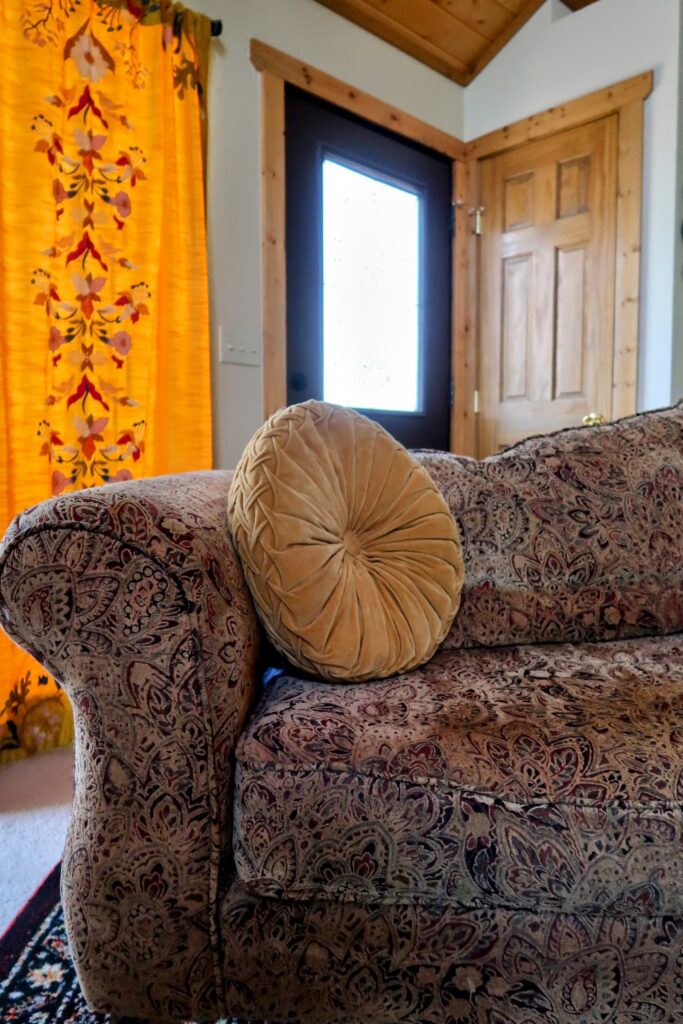
I began noticing how much we already owned instead of focusing on what we didn’t. I appreciated the furniture that had served us well for years, the decorations that already held memories, and the everyday objects that did their job without needing to be replaced. I cared less about creating my perfect aesthetic and more about whether our home felt comfortable, functional, and lived in.
I also found myself thinking about the places that had felt most like home when I was growing up. None of them looked like the perfect vision I had in my head for my own home. I thought about my best friend’s house, my grandma’s house, and other places where I always felt safe and comfortable. They were filled with old antiques, mismatched hand-me-down furniture, faded blankets, and decorations that had been collected over decades instead of bought to fit a certain aesthetic. Nothing matched, and none of it mattered.
I never loved those homes because they were beautiful. I loved them because of how they made me feel. They were warm, lived in, and full of memories.
That was the kind of home I wanted to create, not one that looked perfect, but one that felt like home.
Clothing Purchases and Lifestyle Reality Check
With my clothing purchases, I also had to be very honest with myself about the life I was actually living versus the one I sometimes bought clothes for.
I live in the rural mountains. I wear a uniform to work four days a week. Two of my days off are usually spent at home in an oversized t-shirt and sweatpants. On the one day we run errands, I wear jeans and my oldest, comfiest sweater that I bought from a thrift store when I was in high school. That is pretty much my real rotation.
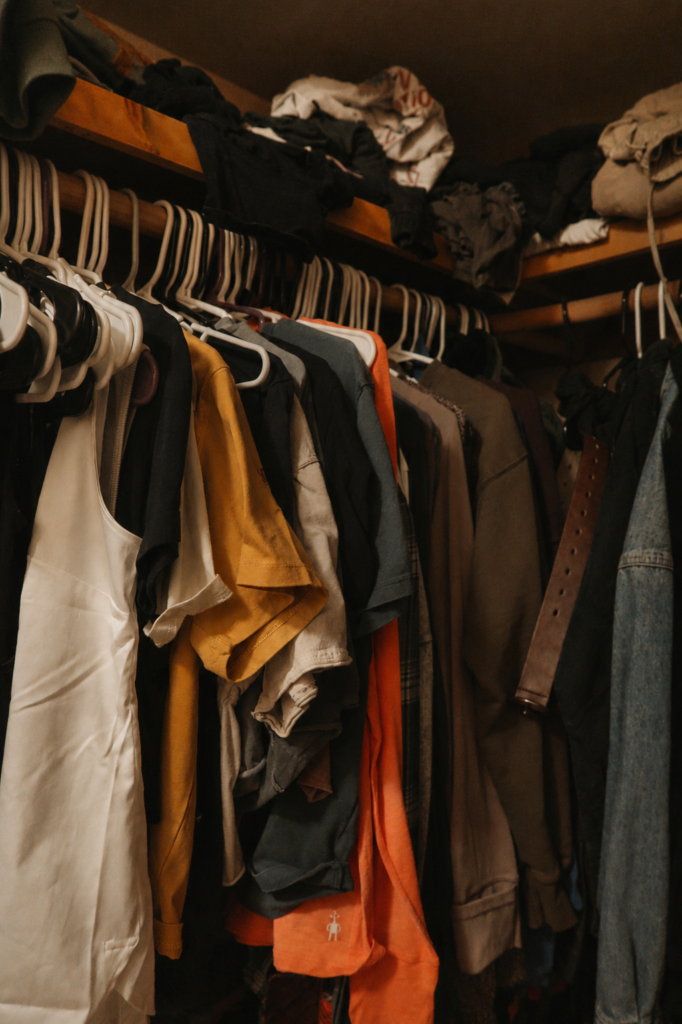
I did not need silk button up blouses. I did not need professional office pants. I did not need matching workout sets when I workout at home, usually in another oversized t-shirt. When I looked at it honestly, for my actual lifestyle, I already owned everything I needed, and I already had clear favorites in my closet that I reached for over and over again.
Once I admitted that to myself, I did a big closet clean out. I got rid of almost half of my wardrobe, which was surprisingly painful because most of what I let go of had been purchased within the last five years. A lot of it was either uncomfortable, impractical, or simply not aligned with the life I was actually living, even if it had made sense in the moment I bought it.
The things I kept were mostly older pieces that I had owned for years and still genuinely loved wearing. And I found that having fewer clothes didn’t make getting dressed harder. It made it easier.
Instead of standing in front of a full closet wondering what to wear, every piece still left was something I liked. There was no second guessing, no digging past clothes I never reached for, and no feeling like I needed something new.
It also made it much easier to resist buying more clothing because I could clearly see that I already had everything I needed. More often than not, I already owned a better version of whatever I was tempted to buy.
The Want List and Learning When Enough Is Enough
My “want” list eventually stopped growing, and in the last five months of the year I did not add a single new item to it. I had come to the conclusion that I really did have enough, and I had become much more in tune with the difference between something I genuinely needed and something I just wanted in the moment.
Slip Ups in a No Buy Year
Now, my no buy year was not, on paper, a perfect success. There were slip ups. I spent $173 at Anthropologie on fall decorations after a very well placed Instagram ad caught me at exactly the right time. I also spent $497 at Lululemon on workout clothes I did not actually need, and $150 on a sweater from Free People. These purchases all happened in September, right when I thought I had finally figured everything out and had my habits under control.
It started with something small and practical. I needed to replace a couple of old bras, and while I was already in the middle of shopping for those, I slipped back into familiar patterns. I started browsing, then justifying, then convincing myself that a few extra items would be worth it because I would “get so much use out of them.” In the moment it felt logical, even controlled, but looking back I can see how quickly I moved from replacing what I needed to justifying what I wanted.
Now, I have worn all of those items many times since and they have become new staples in my closet. The fall decor is also beautiful and something I will continue to use every year in our home. But even with that being true, I still did not need any of it.
Final Thoughts on My Low Buy Year
Despite the slip ups, I still consider my low buy year a success. I reduced my unnecessary spending from nearly $12,000 to just $820, but the money I saved wasn’t the biggest thing I gained.
What changed most was my perspective.
I learned that “enough” isn’t something you arrive at one day and keep forever. It’s something you have to choose to notice. There will always be another sweater, another home decoration, another gadget, or another advertisement promising that one more purchase will finally make life feel complete.
Now, when I feel the urge to buy something, I pause.
I ask myself whether I actually need the item or whether I’m chasing the feeling I imagine it will give me. More often than not, I already have everything I need. And when I don’t, I can recognize the difference much more clearly than I could before.
I still buy things I want. The difference is that those purchases are intentional instead of automatic. They’re thoughtful instead of impulsive, and because of that, I enjoy them far more.
Looking back, I don’t think my low buy year changed my finances nearly as much as it changed the way I see my home, my closet, and the things I already own.
For so long, I thought contentment was something I could buy.
It turns out it was something I had to learn to notice.
Pingback: 5 Mistakes I Made During My No-Buy Year – The Lead Lines