In 2025, I completed a no-buy year after previously spending $12,000 on impulse purchases, clothing, home décor, and online shopping. This is a reflection on the biggest mistakes I made, what caused my overspending habits, and what I learned about breaking a cycle of consumerism.
In 2025, I committed to a no-buy year after spending $12,000 on non-essential purchases the year before. Most of it didn’t feel significant in the moment…$300 here, $600 there…but by the end of the year, it added up fast. If you’re curious about the full experience, you can read about what I learned here.
I managed to reduce that spending to $820, but I didn’t do it perfectly. I made several mistakes that eventually led to an impulse spending spiral about nine months in.
Here’s what I wish I had done differently:
Immediately Deleting Instagram and Pinterest
The algorithm knew me too well. It knew that I would click on any cat-themed decorations from Anthropologie. It knew that I was eyeing that banana slug t-shirt from The Parks Project. It knew I could not pass up an opportunity to browse the new color release from Le Creuset.
If I had never seen the ad, I never would have known the item I now “needed,” existed.
Unfortunately, I didn’t really have a way to fully control what I was seeing and so I was forced to dramatically reduce my social media scrolling to limit my exposure. This was a very difficult habit to break, but overall I was able to make my scrolling on these apps almost non-existent over the first ¾ of the year, which benefited me in more ways than just the no-buy goal.
As September approached though, I found myself a little more confident in my ability to resist impulse buying temptation and so I found myself allowing a little more scrolling time back into my routine. This resulted in one of my slip-ups in which I saw an ad for home décor from one of my favorite online stores and immediately bought it without even much bargaining with myself.
I realized I should not, in fact, be so confident yet.
Letting Myself “Just Browse”
By September, I needed to replace a couple of worn-out bras. Up until then, I had avoided my favorite online clothing stores entirely because I knew how tempting they were. But once I had a legitimate reason to visit them, it became much easier to justify staying a little longer to “just browse.”
That small decision led to my biggest shopping slip-ups of the year. I spent $497 on activewear from Lululemon and another $150 on a sweater from Free People. I told myself I deserved the purchases after doing so well for nine months. I convinced myself they were practical, that I’d wear them constantly, and that they weren’t really impulse purchases. Deep down, though, I knew I didn’t need them.
I had already spent months reflecting on why I shopped and building healthier spending habits, but I overestimated how much those habits had taken root. The urge to browse was still closely tied to the urge to buy. Once I let myself linger on those websites, it became much easier to rationalize purchases I otherwise would have skipped.
That experience taught me that changing my mindset wasn’t enough on its own, I also needed stronger boundaries while those new habits were still forming.
Choosing Appreciation Over More
When I started intentionally noticing what I already owned and practicing gratitude for what I already owned, my urge to shop gradually faded. Instead of seeing my belongings as old or outdated, I began to appreciate their usefulness, the memories attached to them, and the role they had already played in my life.
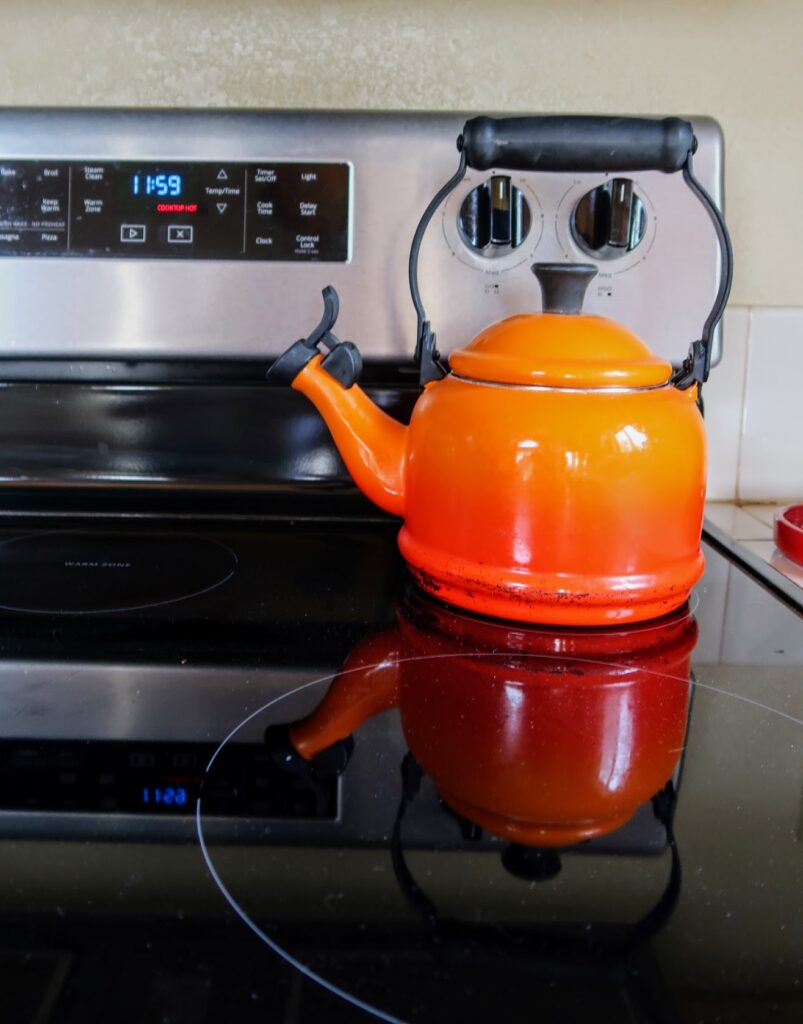
The best example is my 20-year-old Le Creuset teapot. The handle did not stay upright, the enamel was chipped, and the little whistler disappeared years ago. At one point, I planned to replace it with a new, shiny one. But the teapot still did its job. It boiled water. According to my no-buy rules, that meant it didn’t need replacing.
Instead, I spent an afternoon giving it a thorough scrub with baking soda and tinkering with the handle until I got it to stay upright again. The more time and care I invested in repairing and restoring it, the more attached I became. It stopped feeling like an old, worn-out kitchen item and started feeling like something worth preserving.
As I cleaned it, I thought about where it came from. My mom had kept it on our family stove for years before giving it to me when I was in college. Since then, it has followed me through every apartment I’ve lived in and now sits on the stove in my first home.
I am now so emotionally connected to this teapot that I don’t think I’ll ever get rid of it. When it no longer serves its function one day, it’s destined to be a flower pot in my garden so I can continue to hold onto those memories forever.
Confronting My FOMO
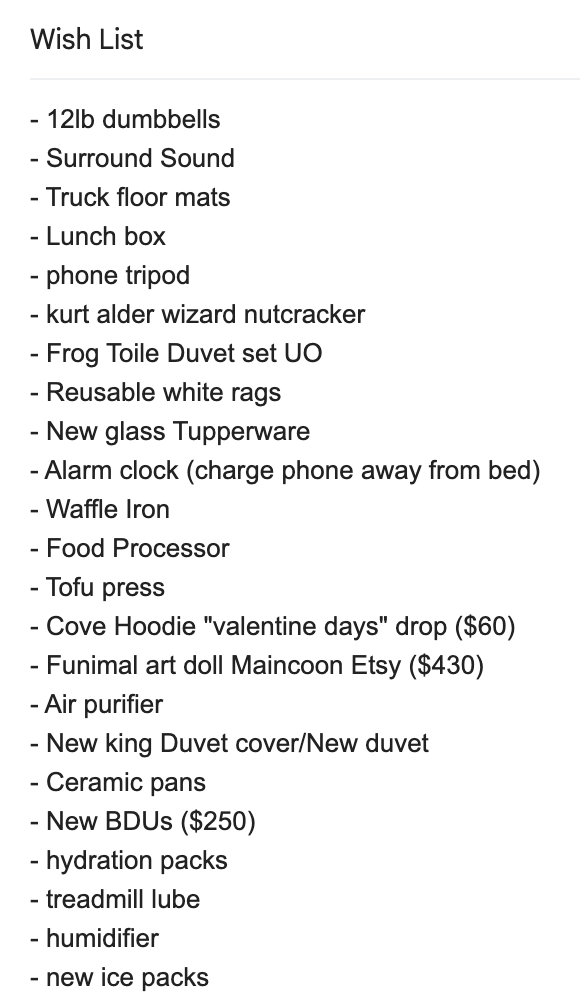
Putting items on a “wish list” during my no-buy year was very difficult for me. I had told myself that I would be allowed to purchase those things at the end of the year if I still wanted them, but I also knew it was possible they would no longer be available. I wrestled with the FOMO every time I put something on the list, arguing with that little devil on my shoulder telling me that I needed to buy it now before it was out of stock.
But I held strong, and found something interesting at the end of the year. When I looked back at my very long wish list at the end of the year, I only wanted to purchase one thing on it: a tofu press.
Not the toile sheets, not the $250 nutcracker, not the handmade, life-sized Maine Coon doll from Etsy.
I realized that many of my impulse shopping urges came from worrying that I would regret not buying something before it sold out. In reality, I didn’t regret passing on 99% of the items on my wish list. Given enough time, the desire to own them simply faded.
Defining What “Enough” Means
Looking back, I wish this had been the very first question I asked myself before starting my no-buy year. Instead, it took me almost an entire year to realize I had never actually defined what “enough” meant to me.
What is enough?
That question changed everything.
Before my no-buy year, “enough” didn’t really exist. My definition of enough constantly moved, and because of that, I always felt like I was one purchase away from finally having everything I needed.
But there is no finish line when you’re always chasing “just one more.”
During my no-buy year, enough was the moment I could look around my home and think, I already have everything I need to live the life I want.
Once I reached that point, shopping stopped feeling like the solution to a problem. There was no problem left to solve.
That doesn’t mean I’ll never buy anything again. Things wear out. My interests and hobbies will change. I’ll eventually need replacements. But now I have a much clearer understanding of the difference between buying something because it adds real value to my life and buying something because I’m chasing a feeling that another purchase can never satisfy.
Your answer to the question, What is enough?, will probably be different from mine. But I think it’s one of the most important questions you can ask yourself before starting a no-buy year or low-buy journey. Because once you define “enough,” it’s much harder for marketing, social media, trends, and scarcity to convince you that you always need more.