I got inspired a couple weeks ago to start exploring my artistic style with stained glass. Up until this point, I had mostly been making gifts for people based on their interests, along with more generic patterns for practice.
Designing My Own Stained Glass Pattern
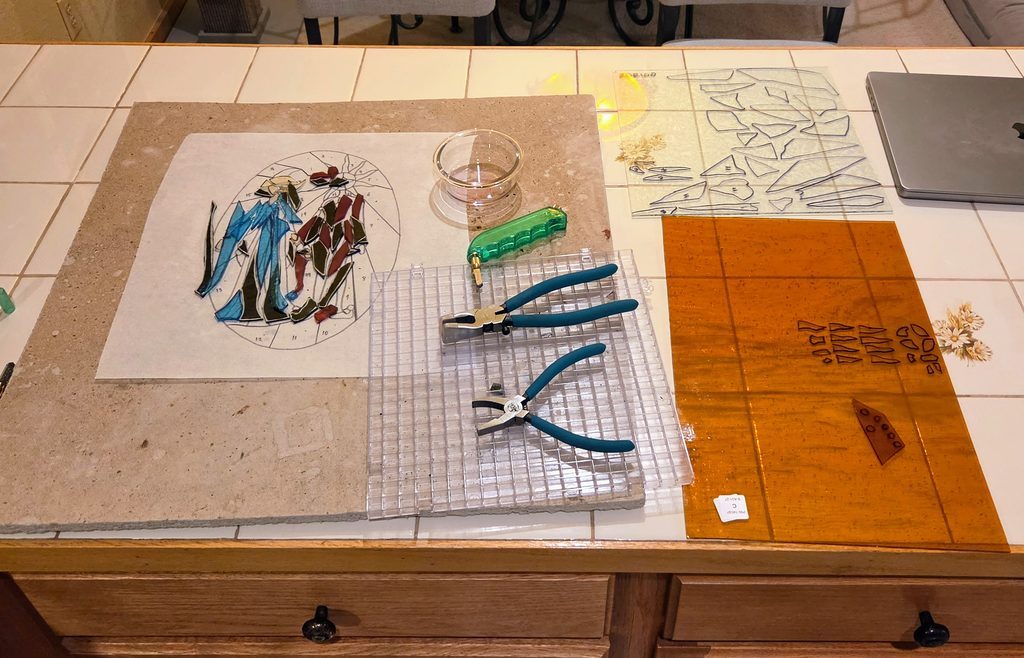
I started brainstorming the kind of artwork and aesthetics I’m drawn to and landed on storybook/dark whimsical fantasy. I drew out a couple of panel concepts that I really liked, then spent about 10 hours making sure I didn’t repeat the same mistakes I had made with my first original pattern (you can read about that here). I checked that every piece of glass was actually possible to cut, that the lead lines were decoratively and strategically placed, and that I had left joints at the top for hanging anchors. Once I was happy with the patterns, I ordered a stash of moody, dark jewel toned and iridescent glass. I also decided I would try using lead came for the first time to border the panels.
Once everything arrived, I was so excited to start working on my sun/moon figure panel. I had recently completed my best panel yet, a cardinal where the solder lines were almost perfect, the edge was beaded well, and the glass had cut and ground great. I was feeling a little more confident going into this one. After all, I had learned from the mistakes I made with my first pattern, this was going to be my 17th stained glass project, and I had spent hours meticulously working out the pattern before I ever touched the glass. I was pretty sure my skills had progressed enough to pull it off fairly well. Not perfect, but good.
Nope.
When My Stained Glass Panel Started Going Wrong
I think I messed up almost every single step throughout the creation of this panel. I cut all of the glass pieces too big because the lines on my printed pattern were the wrong size. I over-ground pieces and broke several of them. My foiling was messy, and my X-Acto knife wasn’t as sharp as it needed to be, which left me with a bunch of frayed edges. I realized pretty quickly that my pattern also had far too many small pieces for my skill level, and I either should have made the entire panel bigger or designed it way simpler.
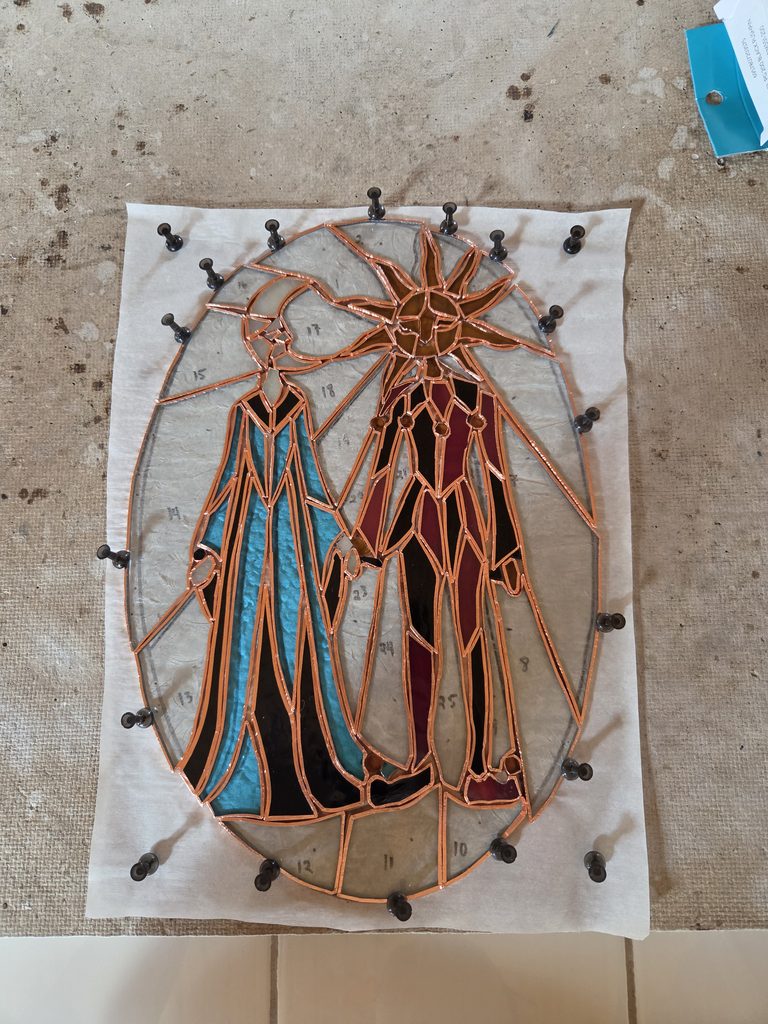
Then I realized I hadn’t properly accounted for the added width of the foil. I had ground the pieces to fit tightly against each other instead of making sure they actually fit the shapes on the pattern, so once everything was foiled and stuck together, the whole thing no longer fit the way it was supposed to. The gaps in my piece were big enough to check the weather through the panel if you wanted to.
I tried to finagle pieces around, fill gaps with folded copper foil, and recut several pieces, but the mistakes had already compounded on each other. Fixing one area just created a problem somewhere else. There was no reasonable way I was going to get this thing back to the pattern I had spent 10 hours perfecting.
At that point, I had to roll with it. I decided I definitely wasn’t going to waste the lead came on this panel, so I started soldering. Sure enough, my solder was lumpy too. Partially because of the messy foil, partially because of the giant gaps I was trying to fill, and partially because soldering has consistently been my weakest skill.
By the time I washed the panel, I was pretty sure this one was going in the closet with my other “practice” pieces.
But then I applied the black patina. I don’t know what it is about that stuff, but somehow the contrast it creates makes my projects instantly look better. Don’t get me wrong, the whole panel looks…handmade, to lovingly put it. The gaps are still there. The solder is still lumpy. Some of the pieces aren’t the shapes they were supposed to be. But with the black patina on it, I suddenly kinda liked it.
Finding My Own Stained Glass Style
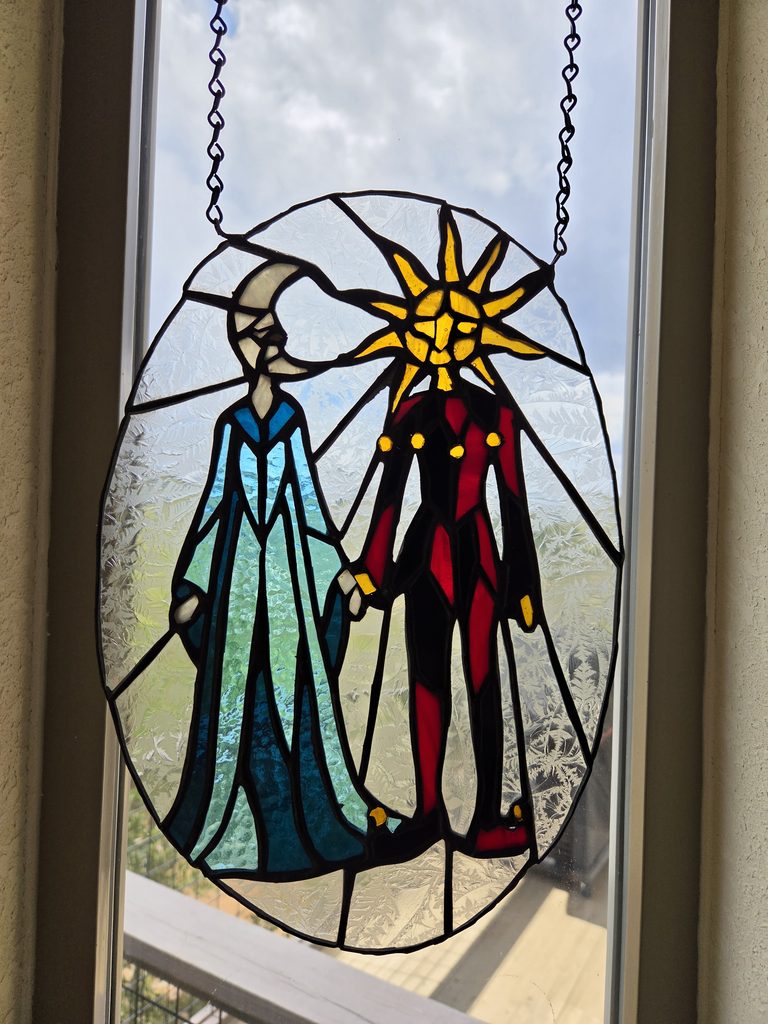
I can look at it and see all of the things I did wrong, but I can also look at it and see the idea I had in my head a couple weeks ago when I decided I wanted to figure out what my own stained glass style might look like. The spirit of my design is there, even if the glasswork isn’t. And at the end of the day, it’s still my artwork. Every piece of it came from my mind and my hands.
Despite the multiple glass-splinter blood sacrifices I had to make throughout the process and the many curse words spewed over my Homasote board, I still enjoyed making it. I got to relieve some stress and tension from my life through the process, and pour all of my focus and attention into this one project. I was frustrated with it plenty of times, but I never stopped wanting to work on it. Even when I knew it wasn’t going to turn out as cleanly as I wanted, I still wanted to see the thing finished.
And I’m glad I did. It’s not my best stained glass work, but it is one of the first pieces I’ve made that actually feels like my artwork instead of a pattern I followed or something I designed specifically for someone else. I already have another panel drawn in the same style, and I’m sure I’ll find entirely new ways to mess that one up too. But I’m still excited to make it.