I’ve mentioned before that one of the hardest parts of my low-buy year in 2025 was the ban on home decor.
When I was a teenager, I loved decorating my space. I made tissue paper flowers for my bedroom walls, hung paper snowflakes from the ceiling, strung Christmas lights, and filled my room with garage-sale knick-knacks. I still remember flipping through a PB Teen magazine and seeing a literal tree branch with paper birds glued to it, selling for $100. So I went outside, found my own branch, glued on my own birds, and hung it above my bed until the day I moved out.
The Search for a Home That Felt Like Me
That impulse followed me into adulthood. When I finally got my first apartment and my first job, I was so excited to finally be able to furnish my space like the ones I’d spent years admiring in interior design magazines.
There was just one problem: home decor is expensive. I had the vision of House of Hackney, and the budget of Urban Outfitters tapestries and grocery store candles.
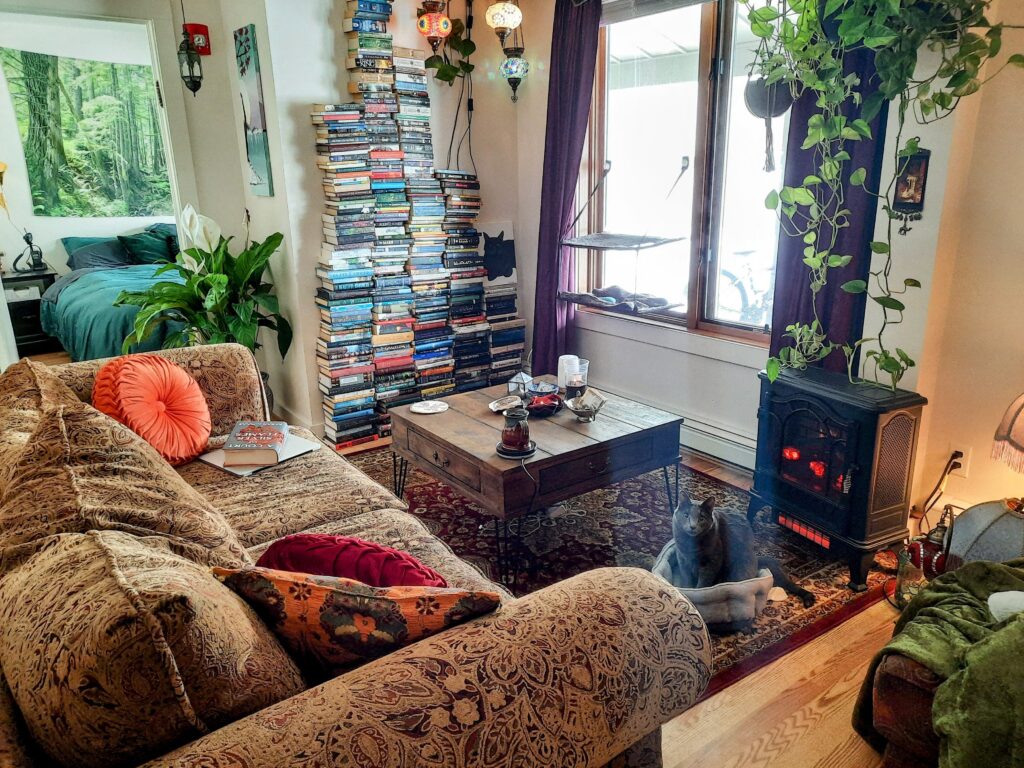
Even in college, when there was no real room in my budget for decor, I’d still find myself making impulse purchases. They just added clutter and made a growing debt even worse. What I actually wanted was for my home to reflect me, for someone to walk in and immediately understand who I was just by looking around.
By the time I paid off that debt and landed my first salaried job, I was also living alone for the first time. That old urge came right back. The first two things I bought were a large Monet print and a real woven tapestry, the same one from the Gryffindor common room. At first, it didn’t feel like a problem. I was living in a 400 square foot studio, so there was only so much space to fill.
Then I moved into my fiancé’s house, and suddenly it was. I felt that same urge to fill every inch of our 1,800 square foot house with furniture and decor that reflected my aesthetic. My fiancé had never bothered to buy much beyond the bare necessities, so I inherited a big blank canvas that felt like it needed me to fill it.
I don’t want to add up how much money, or how many hours, I spent scrolling Pottery Barn, hunting for the pieces that would finally make our home match the picture in my head. And the more I bought, the further away that feeling somehow got. There was just too much space, and nowhere near enough budget for the $1,500 brass serpent floor lamp that would have been perfect in the living room. So I bought a plain one secondhand off Nextdoor instead, and felt like I’d settled.
Learning What Actually Makes a Home Feel Like Home
Then came 2025, and my low-buy year. Home decor was the very first thing on my no-buy list, and for the first time, I had to just sit in a home that felt “unfinished.” And slowly over the following months, something shifted.
I started intentionally noticing what I already owned instead of scanning for what was missing. And strangely, that’s what finally made the house feel full. I stopped walking through rooms looking for gaps to fill. I started seeing the things I already had for what they actually were: useful, or meaningful, or tied to a memory.
That gave me space to ask the real question: why did I want to buy all this stuff in the first place? The honest answer was that I was chasing a feeling. The feeling of having enough. Of having it together. Of home. Underneath it was a belief I’d never really examined: that my house should reflect exactly who I am. Once I saw it clearly, I could see it was an impossible standard to live up to.
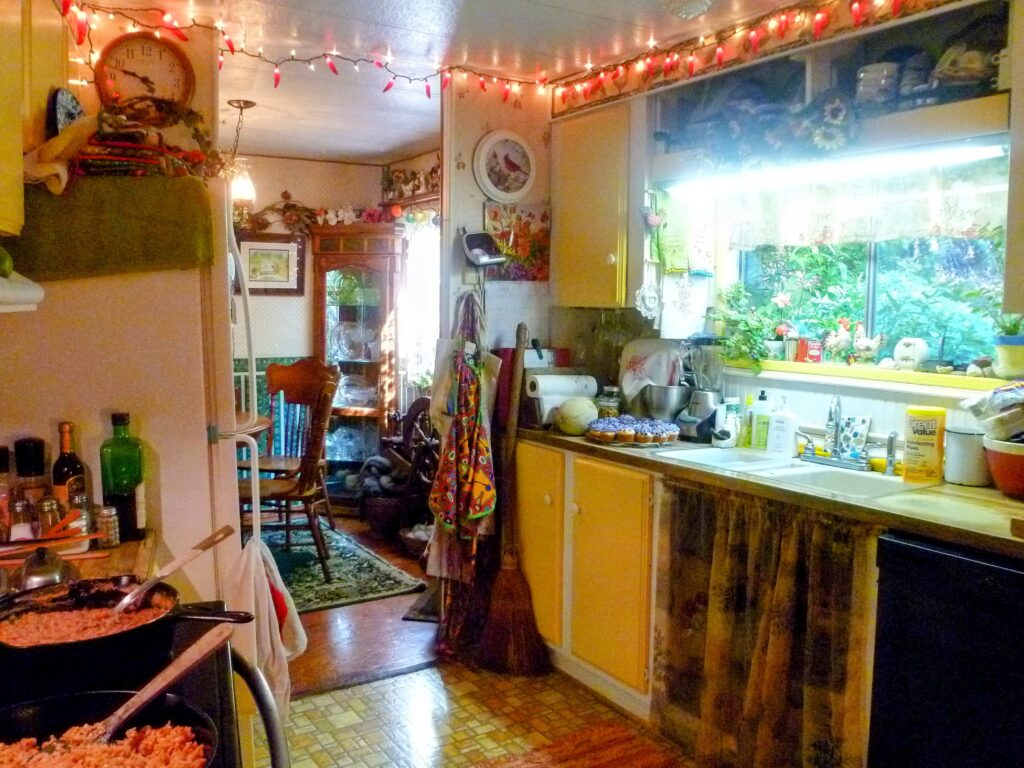
That’s when I started thinking about the places that had actually felt like home to me growing up: a friend’s house, my grandma’s house. None of them looked like a magazine spread. They were full of secondhand furniture and odds and ends collected over decades. What made them feel like home was never the decor. It was the people, and the memories layered into every corner.
And when I really sat with what I wanted my home to feel like, the Burrow kept coming to mind. The Weasleys don’t have much money. The Burrow is filled with secondhand belongings, mismatched kitchen chairs, worn out furniture, and a house bursting at the seams with seven kids. Reading those books as a kid, I always wanted to climb through the page and feel what Harry felt walking into that house. It was never about the decor. If anything, the chaos was the charm. Nothing there was aiming for perfect. It was homemade blankets and overstuffed antique couches, home cooked meals and mismatched everything, all function over form, because the whole point of the place was the people in it.
I Already Had the Home I Wanted
That’s when a quote I’d saved years ago came back to me. I opened my photos and scrolled all the way back to 2016, and there it was:
“I still may not know what I want to be when I grow up, but I do know that someday I want to live in a house filled with my books and travel souvenirs. And the walls that aren’t covered in bookshelves will be covered with photos of my family and friends. When I leave the house I will be going to a job I love, and I’ll return to a person I love. That’s the dream I’m working on.”
I remembered exactly where I was sitting when I saved it, and the exact ache of longing I felt reading it. And I realized I already had all of it. Everything I wanted ten years ago was already mine. The goalposts had just moved without me noticing, until “enough” stopped feeling like enough. That realization actually made me sad. How had all of that stopped being enough?
So I decided, right then, that it was. And for the first time, I actually feel content in my own home.
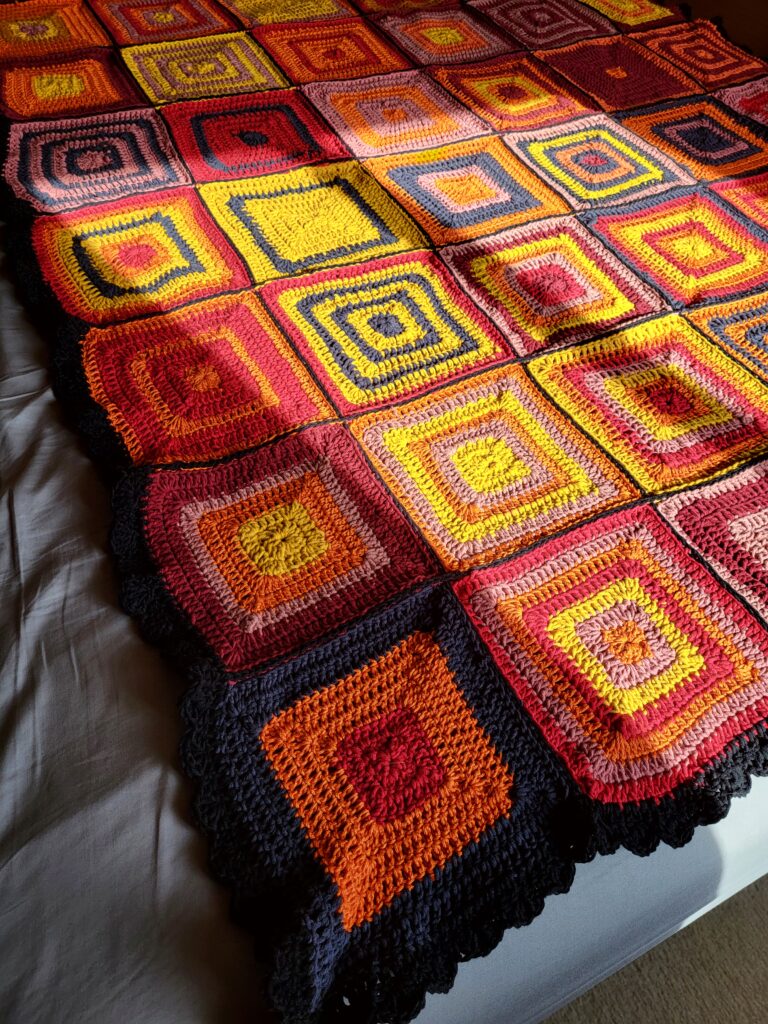
These days, my focus isn’t on filling gaps. It’s on appreciating what’s already here and the purpose each thing serves. Our travel souvenirs and family photos cover the walls. I taught myself to crochet and made a big granny square blanket for the couch. My imperfect, hand-cut stained glass pieces hang in the windows, catching the light exactly as they are.
I’m starting to see my home through the eyes of the child who noticed what made other people’s homes feel special. Home isn’t a look. It’s the same worn spot on the couch, the box of Christmas decorations that appears every December, and the smell of dinner on the stove. It’s blankets with loose threads, furniture with scratches, and mugs pulled from the back of the cabinet because they’re someone’s favorite. It’s people talking over each other, a cat curled up on your lap, and a house that feels lived in instead of finished.
A place where nothing matches, but everything belongs.